
Part I, Book 7, Chapter 11
Champmathieu Is Ever More Amazed
Following Madeleine’s super-dramatic moment, all eyes turn to him. He’s calm, though pale, and his hair has turned completely white in the single hour he’s been in the courtroom.
That detail took me out for a moment. His hair turned completely white? In one hour??? Is that a thing that can actually happen?
I googled “hair spontaneously turn white” and discovered a few things; namely, that it’s more or less scientifically impossible for hair to turn completely white in such a short time. There is, though, a phenomenon of hair turning white in a short timeframe due to stress, and it’s Marie Antoinette syndrome, named so because the doomed queen’s hair allegedly turned white right before she was executed.
It’s kind of cool to realize that this detail of the story, while scientifically unsound, is likely a reference to the French Revolution, and as such Hugo’s drawn a thematic comparison between Marie Antoinette and Jean Valjean. I could chew on this comparison for thousands of words further, but this is not the main point of this chapter, so we must move on.
Madeleine approaches the three convicts (as they are named Brevet, Chenildieu, and Cochepaille, I shall henceforth refer to them as BCC) and asks if they recognize him. Cochepaille is so confused and intimidated that he military-salutes Madeleine. This is so freaking funny to me. I love that Hugo sprinkles these moments of comedy into his most tense scenes.

In no short order, Madeleine announces to the shocked courtroom that he is the real Jean Valjean, and that he should be arrested and Champmathieu let free. The concerned judge immediately asks if there is a doctor present.
How is this intensely serious denouement also so funny???
The prosecutor, who was so mean to Champmathieu, identifies Madeleine as an honorable man and, seemingly in genuinely good faith, repeats the request for a doctor to take this clearly ill man home. Madeleine interrupts him, as he should—the less this lawyer speaks, the better!
With all the eloquent succinctness that Champmathieu doesn’t have, Madeleine catches everyone up on what we, the reader, already know: that he as Jean Valjean was indeed wicked, that he did commit all these crimes Valjean has been accused of, that for years he has been living an honest life under a dishonest name. He does add, for the good of everyone listening, that the harshness of his punishment was incredibly harmful and only served to make him more wicked, not less.
Because it’s clear no one believes this fantastical twist, Madeleine proceeds to prove his story with the showmanship of a Las Vegas magician. He addresses the astonished BCC and systematically rattles off details about their lives that only someone who was actually on the chain gang with them would know. The most dramatic flourish is when he describes the date branded on Cochepaille’s arm along with its significance, and Cochepaille reveals said arm brand to the awed courtroom. Folks, this man is a performer!
Having proved beyond a doubt that he is indeed Valjean, Madeleine gives everyone a heartbreaking smile: “It was the smile of triumph, it was also the smile of despair.”
At this point everyone is so overcome by what they’re seeing that they straight up forget their roles: judge, prosecutor, all of them reduced to shocked bystanders in this drama. Every person there “saw a great light shining”—ah, yet another callback to the divine light of the bishop! I’m learning that Hugo LOVES to thematically bathe his morally heroic characters in light.
Despite the confusion and shock of everything going on, it is instantaneously clear to all present (well, save one) what is happening: that the real Jean Valjean is sacrificing himself so that another man does not have to suffer. Good lord, could the Christ allegory not get more obvious? This is the one “immense luminous fact” that has everyone “dazzled” because once Hugo is on a whole light-imagery-metaphor thing he just won’t stop.
Up til now you may have seen me frequently oscillate between referring to this man as “Madeleine” and “Jean Valjean” because we all know full well those are the same man, but up until now, through Books 5, 6, and most of 7, Hugo has referred to this character as “Madeleine.”
For the very first time, the author calls this man “Jean Valjean,” and it feels a little like the ground disappearing below one’s feet. It’s a significant, momentous moment in the text. Since we “left” Valjean at the end of Book 2, here are the first words that come out of Jean Valjean’s, not Madeleine’s, mouth:
I don’t want to disturb the hearing any further. I’m going, since no one’s arresting me. I have several things to do. The public prosecutor knows who I am, he knows where I’m going, he can have me arrested when he pleases.
Freaking incredible. There are shades of Bishop Myriel in this statement, which I personally find notable because to me, it signifies that Jean Valjean—the “core” person underneath the Madeleine avatar—has actually been fundamentally changed by the bishop.
With that, he goes to leave the courtroom, and everyone is so stunned that they simply part like the Red Sea to let him pass.
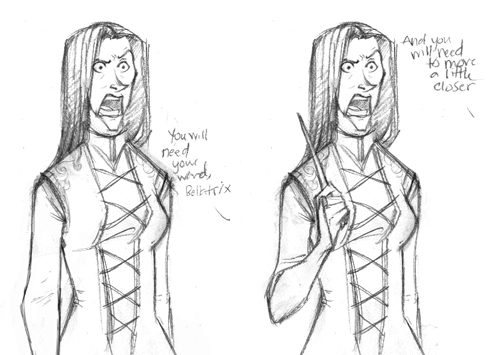
There’s a feeling of something holy and mythical about this moment, but it’s also so incredibly funny to me that once more, I’m picturing someone (everyone in the courtroom) looking like this:
Right before going through the door, Valjean turns with one last mic drop. “All of you here, you all think I am to be pitied, don’t you? My God! When I think of what I was about to do, I think I’m to be envied. All the same, I would rather that none of this had happened.”
The dignity of this man! The moral righteousness! The intense sadness of this statement! I, like the onlookers, am overcome.
Shortly afterwards, Champmathieu is promptly cleared of all charges and let go, and he leaves not understanding what just happened at all. Oof, bless this poor unlucky man—he’s like the dumbest cat in the world.
And just like that, Book 7 is over!
Leave a Reply