
Part I, Book 7, Chapter 2
Maître Scaufflaire’s Shrewdness
Oh boy, a chapter about travel logistics!
Mayor Madeleine needs to make a trip of 50 miles, which is a distance I used to drive on a daily basis but which in this horsepowered era is a pretty daunting challenge. He can’t just call a Lyft, so he goes to a Belgian in town named Scaufflaire (cat name!) who rents out horses and gigs.
I spent way too long trying to think of the perfect “gig economy” joke and then realized this was not the ideal use of my intellectual powers.
Madeleine has a tall order for Scaufflaire: he needs a horse who can go 50 miles in one day, and then make the return journey the next day. 100 miles in two days!!! This is why horses just keep dropping dead in this book.
This is not super germane to the high-powered literary analysis you expect from a girl who is on record as having compared Jean Valjean to Ant-Man, but I wanted to mention that Madeleine starts the conversation by saying “[h]ave you a good horse?” and Scaufflaire responds, “[A]ll my horses are good,” which is the CORRECT answer!
Every time I see a horse on TV I say, “Good horse!” and my husband goes, “What makes that horse good?” and I say, solemnly, “All horses are good.” Scaufflaire gets it.
And because Scaufflaire gets it, he gives Madeleine VERY STRICT INSTRUCTIONS for the very good horse he has that’s up for the job. I love this—a man concerned for the welfare of his horses. Fantine would approve if she weren’t dying from a wholly avoidable, asshole-induced series of tragedies in the hospital.
You probably don’t care about Scaufflaire’s horse-related stipulations, but I do, so I will list them here: Madeleine must give the horse rest on the journey (yes!), and he must supervise the horse’s feeding at the inn to make sure the stableboy doesn’t eat the oats himself (yes!…wait, I’m now concerned that it’s totally normal for stableboys to be so hungry that they’re eating horses’ oats).
Finally, because Scaufflaire’s Little Horse That Could is so smol and can’t pull a full-sized cabriolet, Madeleine will have to travel in a little tilbury with no luggage or companion.
Because what little horse expertise I have only extends to saddles and not carriages, I had to look up the difference between a cabriolet and a tilbury. This, apparently, is a cabriolet:
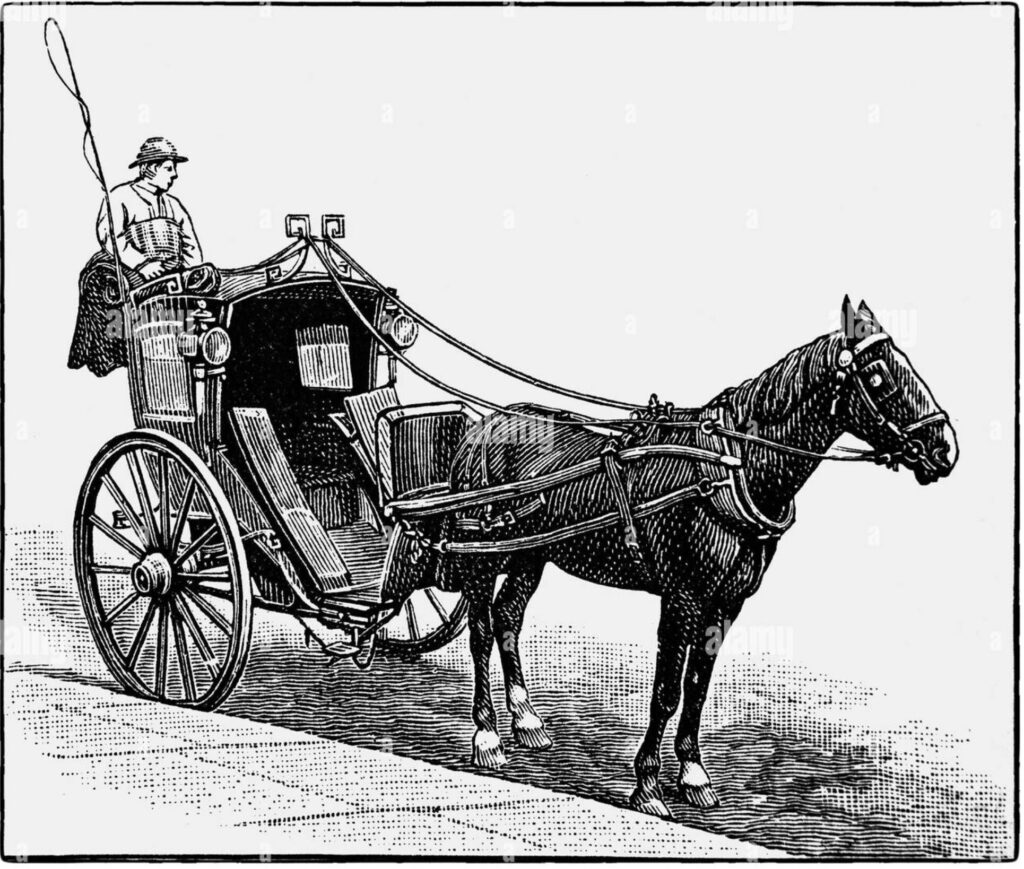
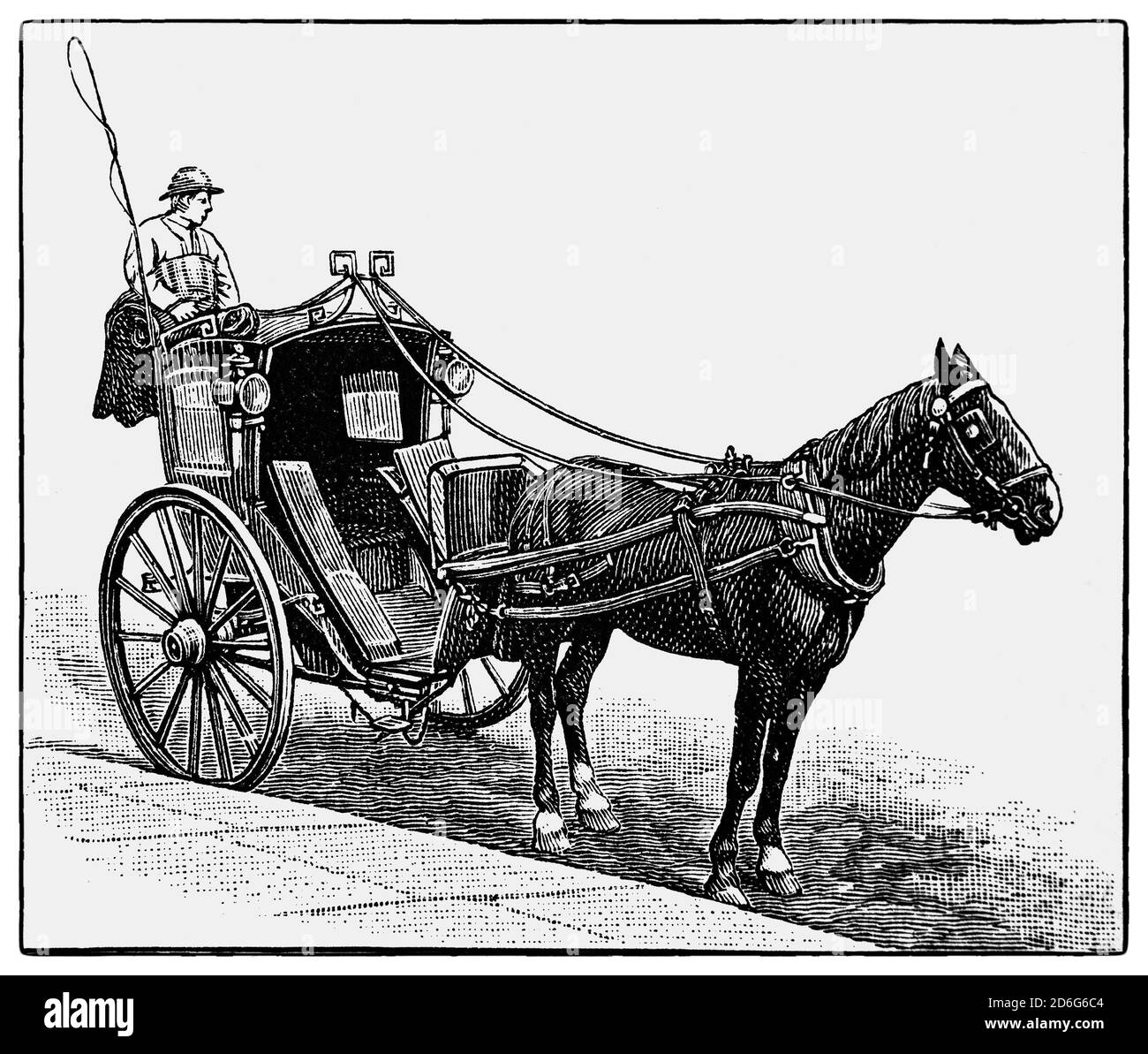
And this is a tilbury:
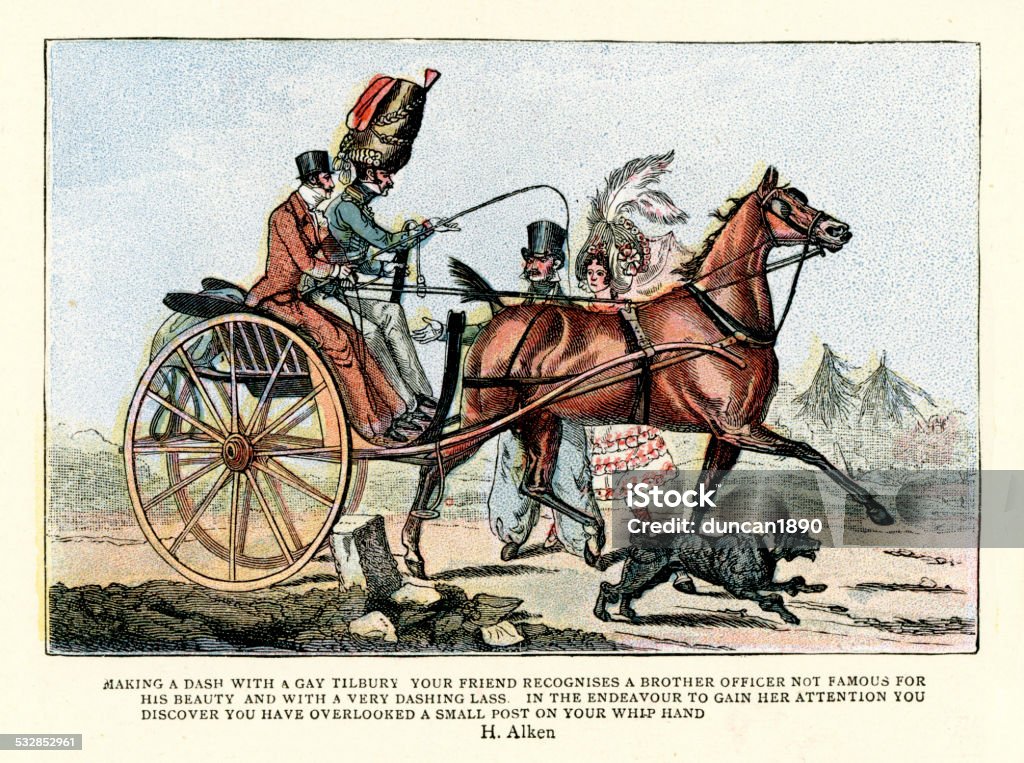

A tilbury is barely a vehicle! It’s just a seat on wheels! This cannot be comfortable for a 50-mile journey.
It gets worse. Scaufflaire points out that it’s the middle of winter, and is very cold, and may rain, and wants to know if Madeleine really wants to make a 50-mile journey on his seat-on-wheels under these conditions. I have already noped out on his behalf—as a convertible driver I simply refuse to drive anywhere if it’s raining—but Madeleine is made of much tougher stuff than me, and continues with the transaction, agreeing to all of Scaufflaire’s conditions. This man is clearly desperate.
Madeleine pays the fees in advance of the journey, asks for the little white horse (does this precious baby have a name???) and the tilbury to be delivered outside his house at 4:30 AM the next day, and leaves.
…And then comes right back, with one more question. He asks Scaufflaire what the total value of the horse and vehicle is, and says he’ll pay for the full worth upfront in case anything happens to them. (At this point I was like DON’T YOU DARE LET ANYTHING HAPPEN TO THE SMOL WHITE HORSE.)
Scaufflaire responds that they’re worth 500 francs, which Madeleine promptly pays without hesitation, making Scaufflaire regret not saying 1000 francs instead. Hugo tells us the horse and tilbury are worth 300 francs at most, and at this point I was torn between outrage that people keep scamming this good and beautiful mayor and indignant righteousness that you can’t put a price on a good horse.
(I also want to mention the fantastic dad joke Hugo gets in, where Madeleine asks how much the horse is worth “on top of the tilbury” and Scaufflaire goes, “In front of the tilbury, monsieur le maire,” which is GREAT. I did not realize there was Dad Humor in this novel.)
As soon as Madeleine leaves for the second time, Scaufflaire gets his wife and they immediately start trying to figure out where the mayor is going in such a hurry. She guesses Paris—which was also my first guess, as I’d assumed Madeleine was off to get Cosette, before I remembered that the Thénardiers are 131 miles away.
Scaufflaire cracks it: Madeleine had a paper with the distances he had to travel—12.5, 15, 21—and Scaufflaire realizes these are the distances between staging posts on the way to Arras, the town where Champmathieu’s trial is to be held the next day.
Even knowing full well how this was always going to play out (“So Javert you see it’s true / This man bears no more guilt than you”) I still felt the weight of this realization—that Madeleine is not off to fetch Cosette for a dying Fantine, but is rushing away to save a stranger from a terrible fate. All that logistics talk was really a slow reveal for the reader. What an absolute wrench this is.
That night, the caretaker who lives under Madeleine’s room hears a lot of pacing and noise above him, and realizes that the window is open and the light is on. We will be told what’s going on in that room, Hugo tells us, in the next chapter.
HERE WE GO.
Horse Notes
Because I was so curious about the horse Scaufflaire was talking about, a “little white horse” of “Lower Boulonnais” stock, I went to look up the breed. The Boulonnais is an adorable little chonky boi, apparently with the cutest personality:
The Boulonnais is known for its calm, steady, and cooperative temperament. It is a docile horse, easy to handle, and remarkably gentle—even with inexperienced handlers. It shows a natural willingness to work and easily adapts to commands, whether in hand or in harness.
Despite its imposing size and strength, the breed displays mental flexibility and a well-balanced character, making it an excellent partner for leisure, draft work, and animal-assisted activities.
The Boulonnais also possesses great intelligence and sensitivity, which fosters trust between horse and handler. Its peaceful disposition makes it rarely fearful or aggressive, and it tolerates various environments (crowds, noise, city driving…) quite well.
A very good horse indeed!
Leave a Reply