Part II, Book 3, Chapter 4
A Doll Makes Its Appearance
There are open-air stalls lined up along the road for Christmas, and they’re all beautifully lit with candles. Right outside the Thénardiers’ inn, there’s a glittering fancy-goods stall with a gorgeous doll front and center.
This is a doll for the pantheon of dolls in literature, like Sara Crewe’s Emily from A Little Princess and Francie Nolan’s Mary from A Tree Grows in Brooklyn. This doll is two feet tall, has real hair, and is wearing a pink dress and gold tiara. She is hopelessly beautiful and also hopelessly expensive; none of the mothers in Montfermeil can buy this for their daughters, and Éponine and Azelma have already spent hours drooling at this doll.
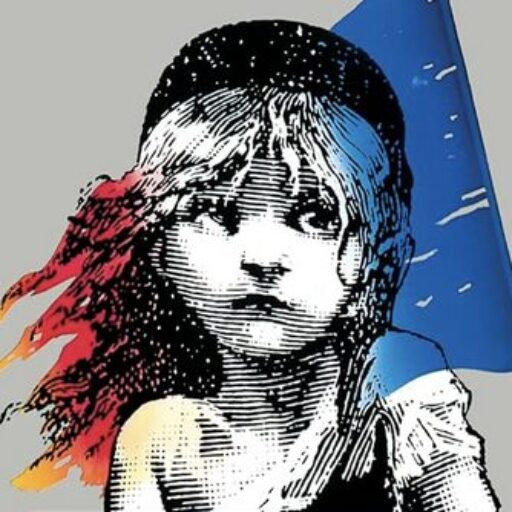
Cosette spots this fabulous doll in its palatial stall on her way out of the inn: “The poor child stood there paralyzed.” The doll, to Cosette, is more than just a doll; Cosette understands that the doll represents a different, unattainable life, and it’s cruel how this young child already realizes that she is a have-not with no hope for joy or beauty in her future. “With the sad and naive wisdom of childhood Cosette measured the abyss that separated her from that doll.”
Eight-year-olds should not be measuring the abyss! This is so sad!
Cosette’s wistful reverie is abruptly crushed when Madame Thénardier looks out and sees Cosette just standing there, the most useless child-slave ever. She screams at her and poor Cosette takes off with her giant bucket.
The paragraph where Cosette gazes at the doll and contemplates the kind of life that is not hers is spiritually the closest we get to “Castle on a Cloud.” The original French version, “Une poupée dans la vitrine” (“A Doll in the Window”) is a much more literal adaptation of this scene, but even then I feel like the lyrics don’t quite capture the poignancy of what Hugo has written.
The closest we get to this scene in “Une poupée dans la vitrine,” imho, is the line where Little Cosette sings of a life in which she sews her doll clothes and doesn’t have to do housework, but I don’t think that gets fully to the heart of Cosette understanding instinctually that a beautiful doll represents an entirely different life that she is not meant to have, one in which she has not crossed the threshold of knowing how cruel and ugly the world can be so early in her childhood.
I find it interesting, actually, that in a musical that has so far hewed incredibly closely to the source material, “Une poupée”/”Castle on a Cloud” have featured the most variance. There’s something almost funny about how divergent Cosette’s most poignant lines are in both songs; the French version is “I wish I could have a doll and that doll could be my daughter” and the English version is “When I disassociate I see my dead mom telling me she loves me.”
All versions of this moment are heartbreaking in their own way. We know, of course, that this doll will pop back up; if it wouldn’t, Hugo wouldn’t have mentioned it. It’s Chekhov’s doll. If only a kind-hearted convict who has conveniently been declared dead would come along and buy poor Cosette this doll!
Leave a Reply