
Part I, Book 1, Chapter 12
Monseigneur Bienvenu’s Isolation
This is a chapter about how the bishop’s aura kills careers. (Just as the bishop himself killed G. NEVER FORGET.)
Hugo paints a fascinating picture of the priesthood to show us what an aberration the bishop is in his world, and how alone he truly is even among his fellow holy men. “[W]hat a hotbed of aspirations is a seminary!” he writes.
Given that I live in a time and place where politics and business are the spheres that ambitious empire-builders are drawn to, I never thought of the priesthood as a career ladder, but things worked differently then. Since the priesthood offers a pathway to becoming pope, a position of immense power, “the priest is the only man who may properly become king.”
Nothing but respect for MY American king.
Hugo describes the power and wealth that men rising through the Church accrue, bringing their entourages with them: “It is an entire solar system on the move.” (These lines are pure poetry.) In describing the scale of ambitions and attendant intrigue, Hugo basically creates the exact same vibes as Conclave (2024). As someone who really enjoyed Conclave, I’m digging the vibe-painting.
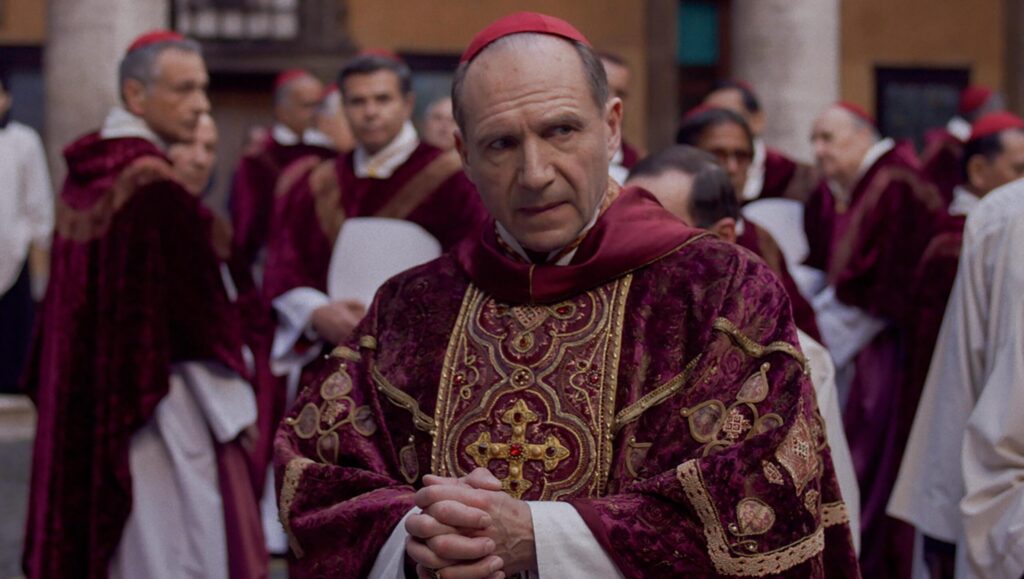
Can you imagine Bishop Myriel hanging with Ralph Fiennes and Stanley Tucci in a sick velvet robe, though? You can’t, because the moment you handed him a bundle of richly dyed, gold-embroidered velvet, he’d be in agony over the fact that there are poor people.
Monseigneur Bienvenu only has as much power as he does because Napoleon happened to see him and like his vibe and granted him his position—he didn’t get there by elbowing others as he clawed his way through the ranks. And he is “fulfilled” staying exactly where he is, Hugo tells us, completely unbothered that through his life choices, he has cut off any path to becoming a cardinal and dead-ended his own career.
“A saint who lives an excessively self-denying life makes a dangerous neighbour,” Hugo says, “[…] And people flee this contagious virtue.” The bishop doesn’t have the orbiting retinue that bishops typically have, because young priests don’t want to work under a guy who isn’t rocketing up the ladder and pulling them along. So he is so very alone, and his whole deal doesn’t influence other powerful members of the Church. Hence the title of this chapter.
Hugo then follows this bittersweet description with a rant about the vapidity of “success.” It’s basically nonstop fire emoji and I loved it. It was a struggle for me to not type up the entire second half of this chapter, so here are some morsels with my reactions.
“We live in a dismal society. Succeed—that is the lesson drip-dripping down from the corruption at the top.”
Whew, we’re off to a great start.
“[S]uccess is a fairly hideous thing. Its false resemblance to merit deceives men.”

“Principle of success: prosperity implies capability. Win the lottery and you are a clever man. Whoever wins is respected. Be born lucky, that is all. If luck is yours, the rest will follow. Be fortunate and you will be thought great.”
I love this. Man raging against the prosperity gospel. You can tell this is a guy who saw too many lucky dipshits gain unearned power and fame and admiration and that this fills him with so much simmering rage. I feel you, Victor, I feel you.
He then goes on to describe some examples of lucky mofos who have been mistaken for great achievers and every single one of these examples is so painfully specific (one is an apothecary who gets insanely rich as a contractor making imitation-leather cardboard soles for the army, if you’re wondering what I mean by “painfully specific”) that even though I have no idea who any of these men are it is very clear Hugo is taking aim at real people and immortalizing their mediocrity so everyone for hundreds of years can know what disappointing sonsofbitches they are. It is delightfully, deliciously petty. I am so here for it. He finishes this catalogue with a masterpiece of utter disdain:
“[M]en call this Genius.” […] They mistake for the constellations in the infinity of space the star-shaped footprints left by ducks in the soft wetland mud.”
I love that last line. It feels like Hugo going MIC DROP, BITCHES! and hurling the mic so hard it smashes through the floorboards. Iconic. Petty Hugo is my favorite Hugo.
Leave a Reply